
Are you truly aware of what’s happening beneath your smile?
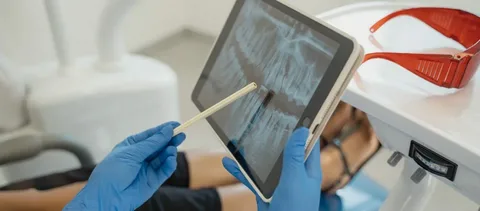
In a country where dental disease remains a major public health challenge, the panoramic X-ray clinic plays an indispensable role. Unlike the smaller, more localized images provided by traditional intraoral X-rays, the panoramic radiograph—often called a “pano”—captures a single, comprehensive two-dimensional view of the entire mouth.1 This wide-angle perspective includes all the teeth, the upper and lower jaws, the temporomandibular joints (TMJ), and even the nasal and sinus areas.2 For Filipino dentists and oral surgeons, this technology is not just an added convenience; it is a critical diagnostic tool that provides the necessary blueprint for complex and preventative dental care.3
The State of Oral Health and the Need for Comprehensive Imaging
The reality of oral health in the Philippines underscores the urgent need for advanced diagnostic capabilities like panoramic imaging.
The Department of Health (DOH), based on the National Monitoring and Epidemiological Dental Survey (NMEDS), reported a striking statistic: approximately 92.4 percent of Filipinos have dental caries (tooth decay), and 78 percent suffer from gum diseases (periodontal diseases). Furthermore, the average number of Decayed, Missing, and Filled Teeth (DMFT) for 12-year-old Filipinos is 4$4.48$, which is alarmingly high compared to the World Health Organization (WHO) standard of 3 DMFT.5
These figures show that dental issues are widespread and often reach an advanced stage. When problems move beyond simple cavities—involving impacted teeth, jaw lesions, or needing complex orthodontic treatment—the dentist needs more than just a close-up.6 The panoramic X-ray answers this need by offering a holistic view, helping clinicians to spot issues that are otherwise invisible or hidden beneath the gums and bone.7
Why the Panoramic X-ray is Essential for Diagnosis and Planning
A clinic that offers panoramic X-rays is equipped to handle a broader spectrum of dental and oral-maxillofacial conditions.8 The detailed, full-mouth image facilitates accurate diagnosis for key dental procedures and conditions.9
- Comprehensive Diagnosis and Planning:
- Impacted Teeth: This is particularly crucial for wisdom tooth assessment. A panoramic X-ray clearly shows the position of the impacted tooth relative to the adjacent teeth and the crucial nerves in the jaw, making surgical planning safer and more precise.10
- Orthodontic Treatment: For patients needing braces, a pano is essential for evaluating the relationship between the upper and lower jaws and the overall placement of all teeth. It is often supplemented by a lateral cephalometric X-ray for side-view measurements.11
- Periodontal Disease and Bone Loss: While intraoral X-rays show specific bone levels, the panoramic view allows a dentist to assess the overall bone health and the extent of bone loss across the entire jaw—a vital part of diagnosing advanced gum disease.12
- Jaw and TMJ Disorders: The full view encompasses the Temporomandibular Joints (TMJ), helping to identify signs of arthritis, dislocation, or other jaw abnormalities that may cause chronic pain.13
- Pathology Screening: The X-ray is a powerful tool for screening for non-tooth-related issues, such as cysts, tumors, and other lesions in the jawbones and sinuses, often allowing for early detection of potentially serious conditions, including oral cancer.14
Key Advantages of Digital Panoramic Clinics
Modern panoramic X-ray clinics in the Philippines utilize digital radiography, offering significant patient and diagnostic advantages:15
- Reduced Radiation Exposure: Digital technology significantly lowers the amount of radiation dose compared to traditional film-based X-rays, making the procedure safer for the patient.16
- Increased Patient Comfort: Unlike traditional X-rays, where film must be held uncomfortably inside the mouth, the panoramic process requires the patient to simply stand or sit still for a few seconds while the machine rotates around their head.17
- Speed and Efficiency: The image is captured and instantly appears on a computer screen, eliminating the time and chemicals needed for film development.18 This allows the dentist to review the image immediately and proceed quickly with the consultation.19
- Affordability and Accessibility: While prices vary, a digital panoramic X-ray in Metro Manila typically costs between ₱800 to ₱2,500, which is an accessible price point for a diagnostic image that covers the entire maxillofacial structure.20 This relatively low cost makes it a practical component of routine dental checkups.
The Future of Philippine Dental Diagnostics
The increasing prevalence of panoramic X-ray clinics across the Philippines represents a positive shift towards more comprehensive and preventive dental healthcare. As evidenced by the DOH statistics, the Filipino population faces significant challenges with untreated dental disease.21 By providing a clear, full-arch picture, the panoramic X-ray helps bridge the gap between symptoms and definitive treatment, allowing clinicians to move beyond simple tooth-by-tooth repairs to a whole-mouth, foundational approach.
It is a technological leap that empowers both the dentist and the patient, promoting better long-term oral health outcomes for everyone.22
Is it time for your clinic to take the wide-angle view of your dental health?
