
Introduction
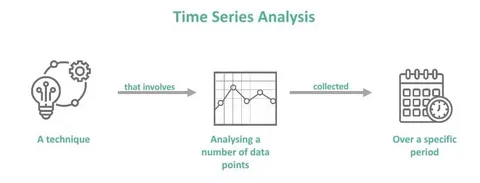
In the world of data science, not all data is static. Many datasets evolve over time, capturing trends, cycles, and shifts in behaviour. This type of data, referred to as time-stamped data, is foundational in industries ranging from finance to healthcare to operations. Time Series Analysis (TSA) is the specialised field that deals with examining, modelling, and forecasting such data. Understanding time-based patterns is crucial for predicting future outcomes, identifying anomalies, and supporting data-driven decisions.
For students and professionals pursuing a data scientist course in Bangalore, mastering time series analysis equips them with the skills to extract insights from sequential data and apply them in real-world scenarios.
Understanding Time Series Data
Time series data is defined by observations collected at sequential time intervals. Key characteristics include:
- Temporal Order: Each observation is dependent on its position in the sequence.
- Trends: Long-term movements or tendencies in the data over time.
- Seasonality: Repeating patterns at regular intervals, such as daily, weekly, or yearly cycles.
- Noise: Random fluctuations or irregularities not explained by trends or seasonality.
Recognising these components allows analysts to select appropriate techniques for analysis and forecasting.
The Importance of Time Series Analysis
Time series analysis provides significant benefits across multiple domains:
- Forecasting: Predicting future values of metrics such as stock prices, sales, or patient admissions.
- Anomaly Detection: Identifying unusual patterns or deviations that may indicate errors or opportunities.
- Decision Support: Helping managers and policymakers make informed choices based on temporal trends.
- Resource Optimisation: Planning operations such as staffing, inventory, and capacity management based on predicted patterns.
By studying time-stamped data, analysts can transform historical information into actionable foresight.
Key Components of Time Series Analysis
Effective time series analysis requires understanding its core components:
1. Trend Analysis
Trends represent the long-term movement of data, either upward, downward, or stable. Detecting trends helps in identifying general directions and potential growth or decline over time.
2. Seasonality
Seasonal patterns occur at consistent intervals. For instance, retail sales often peak during holiday seasons, while energy consumption may vary daily or weekly. Isolating seasonality enables more precise forecasting.
3. Cyclic Patterns
Cycles are long-term fluctuations influenced by economic, environmental, or operational factors. Unlike seasonality, cycles do not follow fixed periods. Understanding cycles is essential for macro-level planning and risk assessment.
4. Noise
Random noise represents unpredictable fluctuations. While noise cannot be eliminated, distinguishing it from genuine trends or patterns ensures more accurate analysis and model reliability.
Steps in Conducting Time Series Analysis
1. Data Preparation
The first step is organising data in chronological order and handling missing or inconsistent entries. Cleaning ensures that subsequent analysis is accurate and meaningful.
2. Visualisation
Graphing the time series allows analysts to detect trends, seasonality, and anomalies visually. Techniques like line plots, rolling averages, and seasonal plots provide initial insights into the data structure.
3. Decomposition
A time series, when decomposed into its trend, seasonal, and residual components, lets you isolate individual effects and simplifies the modelling process. This step enhances interpretability and model performance.
4. Stationarity Testing
Many analytical methods require stationary data, where statistical properties like mean and variance are constant with time. Testing for stationarity and applying transformations if necessary is a critical preparatory step.
5. Model Selection
Depending on data characteristics, different models can be applied:
- Moving Averages: These smooth out short-term fluctuations to highlight trends.
- Exponential Smoothing: This model assigns exponentially decreasing weights to past observations.
- Autoregressive Models (AR): Predict current values based on past values.
- Integrated Models (ARIMA): Combines autoregressive, differencing, and moving average techniques for more robust forecasting.
Selecting the right model ensures accurate predictions and meaningful insights.
6. Forecasting and Validation
Once a model is selected, forecasts can be generated and validated using metrics such as Root Mean Squared Error (RMSE), or Mean Absolute Percentage Error (MAPE). This step confirms the reliability of predictions before application.
Applications of Time Series Analysis
Time series analysis has broad applications across industries:
- Finance: Predicting stock prices, currency exchange rates, or credit risk trends.
- Healthcare: Forecasting patient visits, disease outbreaks, or hospital resource requirements.
- Operations: Optimising inventory levels, production schedules, and supply chain logistics.
- Marketing: Understanding customer engagement patterns and predicting campaign responses.
For learners in a data scientist course in Bangalore, applying time series methods to real-world datasets allows them to bridge theory and practice effectively.
Challenges in Time Series Analysis
Despite its benefits, time series analysis has several challenges:
- Data Quality: Incomplete or noisy data can reduce model accuracy.
- Complex Patterns: Interactions between trend, seasonality, and cycles require careful modelling.
- Dynamic Behaviour: Real-world data often evolves, making static models less reliable over time.
- Overfitting: Models may perform well on historical data but fail to generalise to future observations.
Understanding these challenges ensures analysts take precautionary measures and build robust models.
Best Practices for Time Series Analysis
- Regular Data Monitoring: Continuously track data quality and detect anomalies early.
- Feature Engineering: Incorporate domain knowledge to create relevant features that improve model accuracy.
- Model Comparison: Test multiple models to select the most suitable approach for the dataset.
- Backtesting: Validate models using historical data before deploying them for forecasting.
Adhering to these practices enhances the effectiveness and reliability of time series analysis.
Conclusion
Time series analysis is an indispensable tool for extracting insights from time-stamped data. It allows analysts to understand trends, detect anomalies, and forecast future values. By mastering techniques such as decomposition, stationarity testing, and model selection, professionals can provide meaningful, data-driven guidance across industries.
For those pursuing a data scientist course in Bangalore, developing expertise in time series analysis is invaluable. It equips them with the skills to handle sequential data, generate accurate forecasts, and create actionable insights. As data continues to increase in volume and complexity, the ability to analyse it over time becomes a competitive advantage.
By applying time series analysis effectively, analysts can transform historical data into predictive insights, optimise business operations, and support strategic decision-making. It is not just a method—it is a lens through which the dynamics of the past, present, and future can be understood and acted upon.
